Solutions
Discover our solution for time registration, scheduling, and reporting

 Time & Attendance
 Planning
 Geolocation
 Reports
 Mobile App
 Project Clocking
Resources
Read our client stories, blog articles, and guides.
Solutions
Discover our solution for time registration, scheduling, and reporting
Resources
Read our client stories, blog articles, and guides.
Three Steps to Onboarding New Employees into Your Time Tracking Process

In many companies, it is standard practice to hand new starters an employee guide on their first day. A common pitfall is assuming that it will be read completely, including the section on time tracking. In practice, this is rarely the case. Weeks later, that same person will still be submitting incomplete timesheets, clocking in inconsistently, or asking the same questions repeatedly. This article walks you through three steps to improve your onboarding process for time tracking.
Time tracking habits form quickly, and once formed they are difficult to change. Once set, those habits become automatic, which is exactly why the first few weeks matter so much.
Getting it right from the start is not complicated. It requires a short, structured introduction on day one, a check-in at the end of the first week, and a brief follow-up at the end of the first month.
Step 1: a short introduction on day one
The goal on day one is to walk the new employee through the process so they can do it correctly from their first shift.
A practical day one introduction covers four things:
How to clock in and out. Show them the main method they will use, whether that is an on-site Time Clock, a mobile app, or a web portal. Have them do it once while you watch. A first-time clock-in with someone present is worth more than any written instruction.
How breaks are recorded. This is the most common source of early errors. Be explicit: are breaks clocked separately, deducted automatically, or not recorded at all? Do not assume they will figure it out.
What to do if something goes wrong. They will forget to clock in at some point. Some will clock out at the wrong time. Tell them exactly what to do when that happens, who to contact, and how quickly. An employee who knows the correction process will use it. One who does not will either ignore the error or create an informal fix.
Where the written rules live. Point them directly to the time tracking policy, wherever it is stored. Do not just mention it exists.
Keep the introduction under twenty minutes. The goal is to leave them confident about what to do, not to cover every detail.
Step 2: check in after the first week
The first week is the best opportunity to catch any misunderstandings before they become habits.
At the end of the first working week, check the new employee's recorded hours for the week. You are looking for three things:
Are all entries present and complete?
Do the hours look consistent with their schedule?
Are there any patterns that suggest a misunderstanding about the process, such as consistently missing lunch breaks or clocking in significantly early or late without explanation?
If something looks off, address it directly and without making it a bigger conversation than it needs to be. A brief, practical correction in week one is normal. The same conversation in week six is already a correction of an established habit.
Step 3: follow-up after a month
After the first week, most new employees will have settled into a routine. That routine is worth a brief check at the end of the first month.
Pull their timesheets for the month and look for anything that has been corrected repeatedly. Recurring corrections around the same issue are a signal that the original introduction missed something, or that the employee has a genuine question they have not asked.
A five-minute conversation at the four-week mark, framed as a normal check-in rather than a correction, closes most open questions before they become entrenched.
Setting the right expectations from the start
Two things make a practical difference to how quickly new starters adopt good time tracking habits.
The first is explaining why. Employees who understand that accurate timesheets affect payroll and compliance are more careful about them than employees who were just told what to press. A sentence or two about why the process exists is worth including in the day one introduction.
The second is consistency. If your time tracking process is introduced differently to different people, or if some managers are more strict about corrections than others, new starters get the impression that it does not really matter what they do. The process needs to be introduced the same way every time, by whoever handles onboarding.
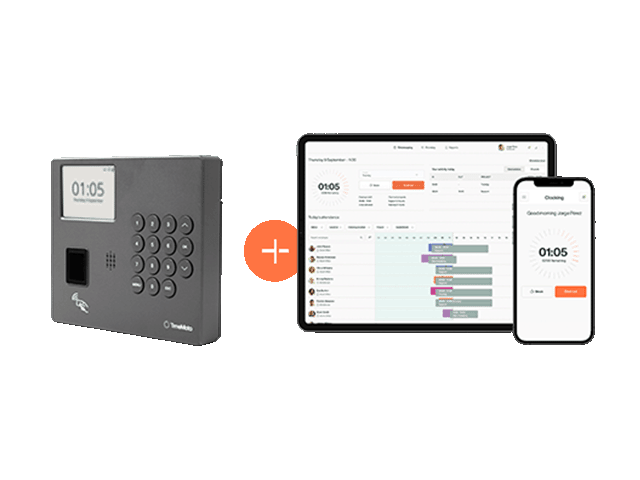
In TimeMoto Cloud, new employees can be set up with the correct schedule and clocking method before their first day. On day one, their profile is ready and their timesheet starts recording from the first clock-in.
Try it with TimeMoto
TimeMoto makes it straightforward to set up new starters correctly from day one. Try it free for 30 days and see how much smoother your time tracking process can be.
Sign up for the TimeMoto newsletter.
Get time on your side again with our newsletter. Sign up now and receive insights about managing your workforce, major trends, news and important product updates. Right in your mailbox.
By signing up you consent to receiving news and promotions via email from TimeMoto B.V. regarding TimeMoto products and services. You have the right to withdraw your consent at any time. For more information, please read our Privacy Statement.